

You may have tried everything.
The dating apps. The introductions. The matchmakers. The books, podcasts, therapy, and workshops. The conversations with friends, who despite being happily married for 17 years, suddenly become relationship experts over a glass of wine.
You may have changed your profile, widened your search, adjusted your expectations, taken breaks, tried again, and promised yourself that this time you would approach dating differently.
And yet, somehow, you keep finding yourself in the same place without a loving wonderful life partner to share your already great life with.
Maybe you meet people, but nobody really excites you.
Maybe you feel chemistry, but it is usually with someone who cannot fully show up.
Maybe promising relationships begin and then mysteriously disappear.
Or maybe you have built such a full, successful life that you genuinely wonder where - or whether - a partner could possibly fit into it.
At some point, it is very tempting to decide:
There are no good men where I live.
The apps are terrible.
My city is uniquely impossible.
Maybe the kind of person I want simply doesn’t exist.
And if you’re particularly accomplished, you may have an even more sophisticated explanation.
I’m just very independent.
My standards are high.
I know what I want.
Possibly even true.
But what if the problem is not dating?
What if the real obstacle is something you cannot yet see?
That’s what I mean by a blind spot. And once you understand what a blind spot actually is, the entire dating conversation starts to look very different.
Wondering what your own blind spot might be?
Join me live on Substack this Thursday, September 17th at 12 noon ET for What Is Your Love Blind Spot?
We’ll explore how hidden patterns may be influencing whom you attract, what feels exciting, and whether healthy love feels safe enough to receive.
Bring your questions. This will be a real, honest conversation about what keeps us stuck and what it actually takes to change the pattern.
There is no separate registration required. Subscribe to The Conscious Love Path so Substack can notify you, and use the link below to join me live on Thursday.
But first let’s talk about the blind spots.
A blind spot is not a flaw
A relationship blind spot is a belief, expectation, protective strategy, or attraction pattern influencing your choices outside your conscious awareness.
It is not proof that you are broken.
And it does not mean you have failed at love or have not done enough work on yourself.
In fact, blind spots are often hardest to recognize in intelligent, accomplished, highly self-aware people. You’re good at figuring things out. You evaluate situations. You anticipate outcomes. You solve problems. You protect yourself. Those abilities may have helped you create extraordinary success in other areas of your life.
But love asks something different of us.
Love requires discernment, but it also requires openness.
It requires boundaries, but it also requires receiving.
It asks us to remain completely ourselves while allowing another person to matter.
And sometimes the very strategies that helped us become successful, safe, capable, and independent, can quietly make it difficult for love to reach us.
That’s the tricky part.
You can be incredibly self-aware and still have a blindspot.
You can practically have a PhD in yourself and still miss the one thing that matters most.
Protection rarely looks like fear
A blind spot does not usually walk into the room wearing a name tag that says:
Hello! I am your unresolved emotional pattern.
Wouldn’t that be convenient!
Instead, it sounds reasonable. It sounds like:
“There are no emotionally available partners here.”
“I’m simply very independent.”
“My standards are high.”
“I’m too busy to deal with dating right now.”
“I’m just following my intuition.”
“When it’s meant to happen, it will happen.”
And here’s the thing, each of those statements may contain some truth. Geography matters. Standards matter. Timing matters. Intuition matters.
But sometimes a truth can also become a hiding place.
What feels like discernment may contain emotional armor.
What looks like independence may actually be a discomfort with receiving - support, care, or letting some else show up for you.
What feels like patience may actually be protective resignation.
And what feels like a lack of available partners may be influenced by whom you notice, trust, feel attracted to, or allow close enough to really know you.
That was true for Stephanie.
She thought she was doing everything right
Stephanie Sare is a successful HR professional and a high achiever. Like many accomplished women, she approached love in the same way she approached life: Do the right things. Make good choices. Work hard. Eventually the right outcome will follow.
She wanted marriage. She wanted children. She wanted a committed, emotionally mature partner.
The problem? That was not the kind of man she kept meeting
The men she dated seemed far less committed than she was. They were comfortable with “let’s see what happens” when Stehanie was looking for something intentional and lasting.
And she had already been through a particularly toxic relationship that had taken a long time to recover from. Then she entered another relationship believing she and this man were exclusively building something together.
Six months in, he dropped a rather significant plot twist.
He wanted to try being polyamorous.
Stephanie was devastated and bewildered.
What am I doing wrong?
She had gone to therapy. She had talked about her past. She had worked on herself. She had tried to understand why she kept ending up in relationships that weren’t giving her what she wanted.
When she asked her therapist what she should actually do, the answer was essentially: It takes time.
But Stephanie didn’t want to keep waiting for time to magically fix something she couldn’t understand.
Want to hear Stephanie tell her story in her own words? Watch my conversation with Stephanie here:
And this is where the story gets interesting. Because Stephanie didn’t need another dating tip.
She needed to connect dots she had never been able to connect before.
Therapy had helped her understand and talk about her past. But through our work together, she began seeing something deeper: how that past was influencing the way she saw the world, what she looked for in a partner, the choices she made, and even what she needed emotionally.
At one point, she told me:
“I didn’t know what my emotional needs were until our program.”
That was one blind spot.
There was another.
Love was enormously important to Stephanie, but her life wasn’t organized in a way that reflected how important it was to her.
She was successful. Busy. Responsible. Good at getting things done. And somewhere along the way, love had become something she wanted very much but didn’t necessarily have the space to full prioritize it.
So we started looking at the whole picture.
Stephanie learned to set boundaries, not just in dating, but at work, and with herself. She had a conversation with her boss about what she needed and created more balance in her life. She learned to understand her feelings and communicate them in a way another person could actually hear.
And then she brought those same skills into dating.
She became much more clear about what she wanted: marriage, children, emotional maturity and a true partnership.
And that clarity changed the question she asked herself.
Looking back, Stephanie realized there were men she might have once settled for because they were attractive, successful and interested in her.
But now there was a much more important question:
Did this person meet my emotional needs?
If the answer was no, she didn’t need to negotiate with herself.
She didn’t need to convince herself that maybe it could work.
She could simply recognize: You’re not my match.
That is empowered dating.
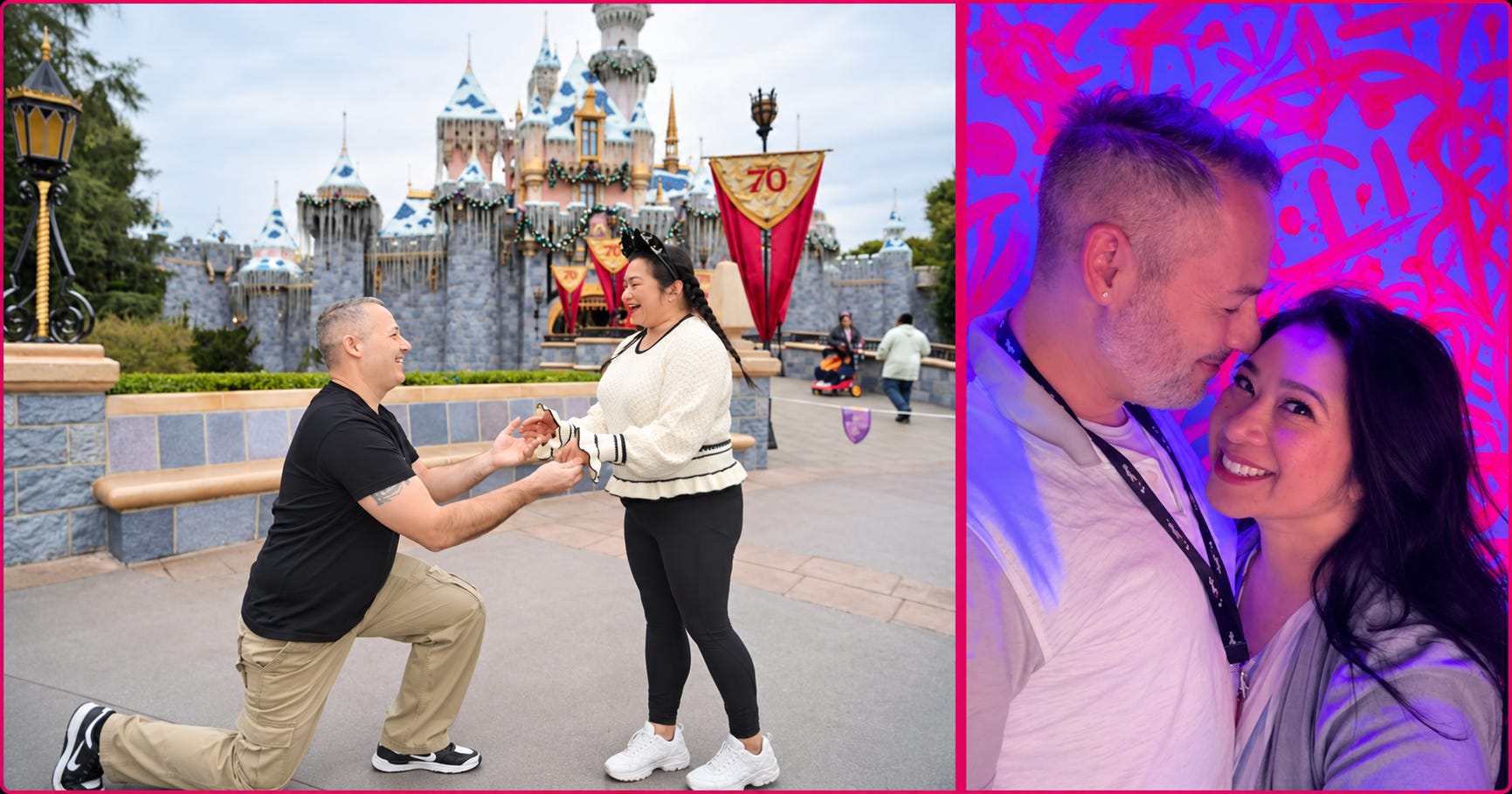
And then she met the man who would become her husband.
The difference i was noticeable.
So noticeable that two friends, from completely separate parts of Stephanie’s life, independently told her the same thing: the way she talked about this relationship was completely different from the way she had talked about every relationship before it.
She felt safe… really safe.
They could have mature conversations without screaming, fighting or emotional chaos. She could ask questions and express herself. She didn’t feel like she had to hide some part of who she was to keep the relationship intact.
Early in their relationship, Stephanie told him about her triggers and emotional needs. And instead of those needs frightening him, he listened. He paid attention. He became mindful of them.
He lived two and a half hours away, but he consistently found ways to make her feel cared for. After a particularly difficult day at work, he sent Starbucks and treats to her door with a sweet note. When she returned from a 15-day trip to the Philippines, he didn’t simply pull up to the curb at the airport. He was waiting for her at baggage claim with a rose.
And apparently one romantic airport reunion wasn’t enough, he woke up at five in the morning and baked her protein banana bread for breakfast because he knew she would be hungry after the flight.
This is where another blind spot showed up.
Receiving that much care made Stephanie uncomfortable.
She started worrying that he was doing so much for her and she wasn’t doing enough for him. She became emotional and asked him what she was giving back.
His answer was simple.
He did those things for her because he already felt loved by her.
She didn’t have to earn the care. She didn’t have to match it transaction for transaction. She could receive it.
That moment helped Stephanie recognize just how different this relationship was. In previous relationships, she had felt as though she was constantly trying to make things work. With him, she said, “It’s just coming so naturally.”
And when she talked about finding him, she said something that stopped me: “You were worth the wait.”
On August 16, Stephanie married that Stephanie married Shane.
Their professional wedding photographs are still on their way—and I can’t wait to share one from their beautiful day with you soon.
We had planned to be there to celebrate with them and unfortunately weren’t able to make it. But watching Stephanie arrive at this moment was especially meaningful because I remembered the woman who had once asked me, “What am I doing wrong?”
She had kept meeting men who didn’t want what she wanted. She had done therapy. She had done the work. And still she couldn’t connect the dots. She was so capable and busy that she hadn’t realized how difficult it had become to make love a true priority.
Stephanie described the heart of her transformation perfectly when she said, “You don’t know what you don’t know.”
That is exactly what a blind spot is.
It’s not something you’re consciously choosing. It is something you cannot see, until, suddenly you can.
Stephanie didn’t need to become a different woman to find her husband. She needed to see what she hadn’t been able to see before: how her past was influencing her choices, how her patterns were shaping what felt familiar, how her relationship with work was affecting the space she had available for love, and even how little she understood about her own emotional needs.
And perhaps most importantly, that being capable of handling everything herself, didn’t mean she had to keep doing everything herself.
As Stephanie became clearer about who she was, what she needed, what she wanted and what she would no longer settle for, she didn’t become less discerning.
She became more discerning.
She could recognize healthy love when it arrived.
She could receive it and she could choose it.
Sometimes the blind spot isn’t keeping you from finding love, it’s keeping you from recognizing the kind of love you’ve actually been looking for.
What we cannot see still influences us
This is the nature of a blind spot.
We cannot consciously change something we do not yet recognize, but it can still influence nearly every part of our love life.
A blind spot can affect:
Whom we notice and dismiss
Who feels exciting or familiar
How we interpret another person’s interest
Whether consistency feels reassuring or strangely boring
How easily we communicate what we want
Whether we can receive care without becoming uncomfortable
How quickly we expect disappointment
Whether we create real room for partnership
How we respond when someone begins to get close
You may genuinely want an emotionally available partner while repeatedly feeling chemistry with unavailable people.
You may say you want support while continuing to prove that you can handle everything yourself.
You may believe you are open to love while quietly expecting it not to work out.
You may know exactly what a healthy relationship should look like and still make choices from an earlier version of yourself - the version who learned that closeness was unsafe, that needs were dangerous, or that love had to be earned.
This is not hypocrisy. It is the difference between conscious desire and unconscious protection.
And that distinction changes everything.
Connection or protection?
One of the central questions in becoming Love Ready™ is:
Am I choosing from connection or from protection?
Protection is not wrong. It probably developed for a very good reason.
Maybe it helped you survive inconsistency, rejection, betrayal, abandonment, criticism, or a childhood in which your emotional needs were not fully met.
Your protection deserves respect.
But a strategy that once kept you safe may now be keeping healthy love at a distance.
The answer is not to discard your boundaries and start trusting every attractive stranger with a pulse. Please don’t do that!
The answer is to replace unconscious armor with something much more powerful:
Self-trust.
Clear boundaries.
Emotional availability.
Authentic communication.
Wise discernment.
Conscious openness.
Armor says, “Don’t let anyone close enough to hurt you.”
Discernment says, “I can stay open and still choose carefully.”
Those are not the same thing.
And becoming Love Ready™ is not about becoming less discerning. It’s about being open enough to recognize love when it shows up and wise enough to choose it.
Why dating strategies alone will not solve it
There is absolutely nothing wrong with improving your dating profile, meeting more people, accepting introductions, or working with a matchmaker. Go to the event. Say yes to the dinner. Those things can create valuable opportunities.
But greater access cannot solve an internal pattern.
If you are unconsciously drawn to emotional unavailability, a larger dating pool may simply give you more unavailable people to choose from.
Congratulations! Now you have an even bigger pool of the wrong people!
If receiving care feels uncomfortable, meeting a generous partner will not automatically make receiving feel safe.
If consistency feels unfamiliar, you may overlook someone grounded while feeling intense chemistry with someone unpredictable.
If part of you no longer believes extraordinary love is available, you may enter every interaction already preparing for disappointment.
This is why someone can be successful, self-aware, and actively dating, and still repeat the same relationship experience.
It is not because you are incapable of love.
You may be trying to solve the visible problem without recognizing the invisible one.
The moment you see it, you regain choice
Discovering a blind spot can feel uncomfortable at first, but ultimately, it is incredibly hopeful.
If the problem is only “There are no good people,” Well… good luck! You’re basically waiting for the universe to update the dating inventory! But if an unseen belief, pattern, or protective strategy is influencing your experience, something becomes possible.
You can work with it.
You can understand where it came from.
You can honor how it tried to protect you - and decide whether it still deserves to be in charge.
You can learn to recognize healthy love, receive it, choose it, and build it.
That does not mean everything is your fault. It does not mean every dating disappointment was created by your wounds. Other people have patterns, limitations, bad timing, questionable communication skills, and their own emotional baggage.
Sometimes a man (or woman) really is just not that into you. We can handle that.
The point is simply that you are no longer powerless.
Once you can see what has been operating beneath the surface, you have a choice you didn’t have before.
So what might you not be seeing yet?
Your blind spot may be connected to belief: Do you genuinely expect extraordinary love to be available to you?
It may involve emotional availability: Is there real room in your heart, life, and identity for partnership?
It may involve trust and receiving: Can you allow someone to care for you without feeling weak, indebted, or out of control?
It may live in identity and protection: Are you choosing from who you are becoming or from what happened to you in the past?
Or it may involve authenticity, discernment, and partnership: Can you let yourself be known, communicate clearly, hold healthy boundaries, and consciously build something with another person?
You do not need to have every area perfected before you can find love.
Love Ready is not a grade.
It is not a gold star you earn after completing 30 years of inner work.
And certainly not another thing you can add to your already impressive to-do list.
It is the growing capacity to recognize, receive, create, and sustain healthy love while remaining fully yourself.
Stephanie did not need to become someone else to find Shane.
She needed to see what was quietly standing between her and the love she already desired.
Sometimes love is not as far away as it appears.
Sometimes the next step is not searching harder.
It is seeing more clearly.
What Could Change If You Finally Saw the Blind Spot?
If you have been dating, trying, learning, analyzing, taking breaks, and starting again—but you still wonder what you might be missing—it may be time to look somewhere different.
Not because you are broken.
Not because you need fixing.
Because there may be something influencing your love life that you simply cannot see yet.
Join me live on Substack this Thursday at 12 noon ET for:
What Is Your Love Blind Spot?
We’ll talk about why intelligent, accomplished, self-aware women can still repeat painful relationship patterns—and how hidden beliefs, fears, and protective strategies may be affecting attraction, emotional availability, and your ability to receive healthy love.
Bring your questions. This will be a real, heart-centered conversation about what we cannot change until we can see it—and why your pattern can absolutely be broken.
There is no separate registration required. Subscribe to The Conscious Love Path so Substack can notify you, and use the link below to join me live on Thursday.
You have already built an extraordinary life. You don’t need to become someone else to share it with someone extraordinary.
You may simply need to see what you haven’t been able to see before.